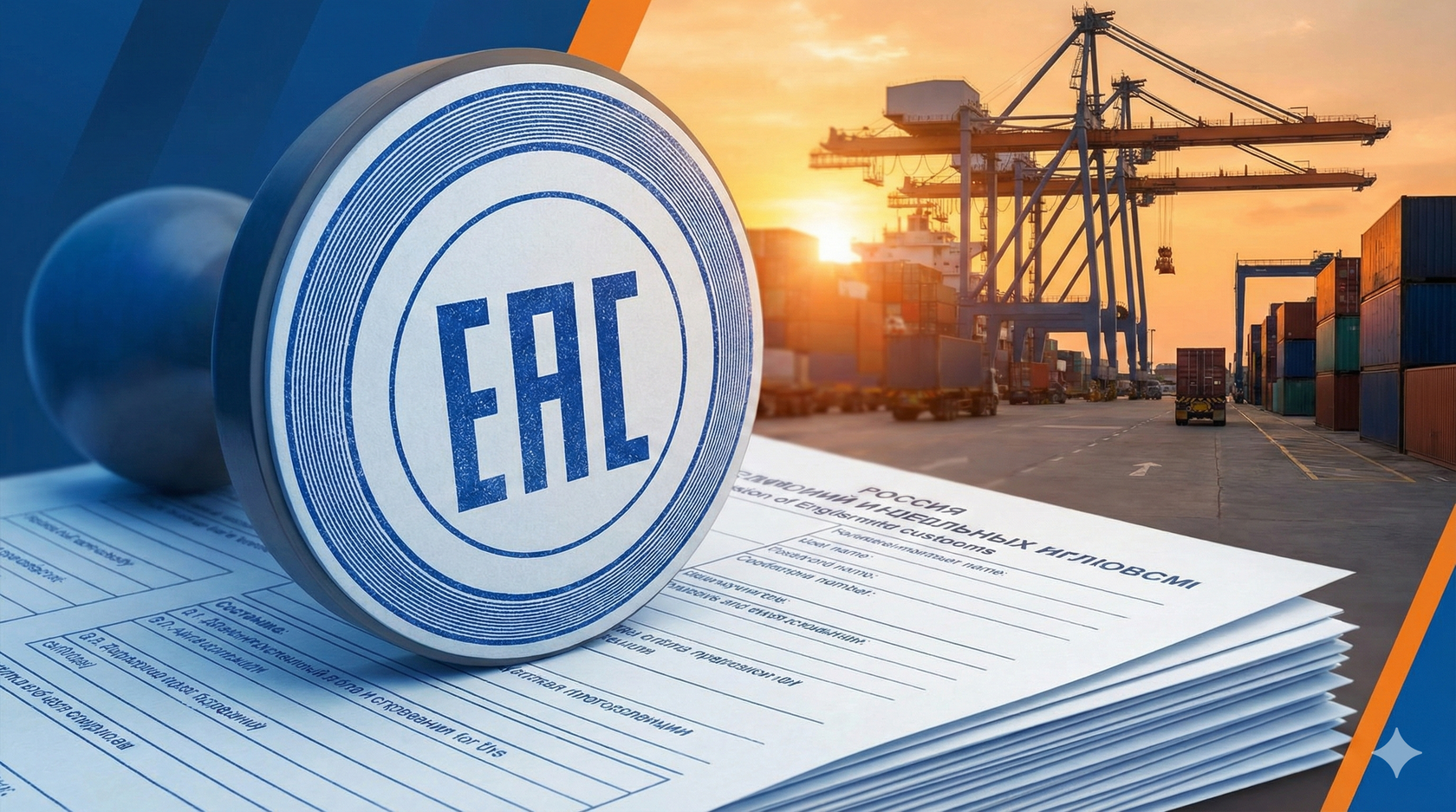
90% of delays and penalties experienced at Russian customs are due to document errors. What is an EAC Certificate, and what are the differences between it and a Declaration? Customs management guide according to HS code.
For companies accustomed to exporting from Türkiye to Europe, Russian customs often come as a cold shower. Small document errors that are tolerable in Europe can lead to goods waiting for weeks at Russian customs, warehouse penalties, and even being sent back without being nationalized.
Our warning at RFCONS is clear: Russian customs is a process that must be completed at the table before the goods leave. Here are the critical points you need to pay attention to.
1. Your Passport: What is an EAC Certificate?
Within the framework of the "Eurasian Economic Union" formed by Russia, Belarus, Kazakhstan, Armenia, and Kyrgyzstan, no product that does not comply with certain standards can pass through customs. The document for these standards is called EAC (Eurasian Conformity).
There are two types of EAC, and confusing them is a costly mistake:
• EAC Declaration: This is a simpler procedure. The company guarantees the conformity of the product with its own declaration. (Usually industrial spare parts, etc.)
• EAC Certificate: This is much more difficult. The authorized institution needs to take samples, test them, and sometimes come to the factory for an inspection. (Children's clothing, cosmetics, some foods, etc.)
We determine which one your product is subject to with HS Code (GTIP) analysis.
2. "Don't Ship Goods Without Sending Samples"
The most common mistake is this: The company loads a huge truckload of goods and says, "We'll handle the certificate when we get there." This is impossible. According to the regulations; a sample must be sent first, a laboratory test must be performed, the certificate must be issued, and then mass shipment can begin. Otherwise, if the customs officer realizes that the certificate was issued after the goods, they will reject the goods as "contraband". 3. The HS Code (Customs Code) Trap
The customs code (HS Code) you use in Türkiye may not be exactly the same in Russia, or it may fall into a different tax bracket. Choosing the wrong code leads to two things:
1. You pay extra taxes.
2. You receive penalties due to missing permits. RFCONS experts ensure cost optimization by placing your product in the most accurate class according to the Russian Customs Tariff Schedule.
4. "Green Line" Operation with RFCONS
Our job is not just to transport documents, but to manage the process.
• Pre-Inspection: We prepare your invoice, packing list, and certificates in Russian and English before the goods are loaded. • Digital Declaration: We submit your declaration digitally with our electronic signature authority.
• Cost Analysis: We calculate the cost of the goods (Tax + VAT + Freight + Customs Clearance) down to the last penny from the start.
Russian customs is not a place to leave to chance. Get professional help to avoid interruptions to your business.
For companies accustomed to exporting from Türkiye to Europe, Russian customs often come as a cold shower. Small document errors that are tolerable in Europe can lead to goods waiting for weeks at Russian customs, warehouse penalties, and even being sent back without being nationalized.
Our warning at RFCONS is clear: Russian customs is a process that must be completed at the table before the goods leave. Here are the critical points you need to pay attention to.
1. Your Passport: What is an EAC Certificate?
Within the framework of the "Eurasian Economic Union" formed by Russia, Belarus, Kazakhstan, Armenia, and Kyrgyzstan, no product that does not comply with certain standards can pass through customs. The document for these standards is called EAC (Eurasian Conformity).
There are two types of EAC, and confusing them is a costly mistake:
• EAC Declaration: This is a simpler procedure. The company guarantees the conformity of the product with its own declaration. (Usually industrial spare parts, etc.)
• EAC Certificate: This is much more difficult. The authorized institution needs to take samples, test them, and sometimes come to the factory for an inspection. (Children's clothing, cosmetics, some foods, etc.)
We determine which one your product is subject to with HS Code (GTIP) analysis.
2. "Don't Ship Goods Without Sending Samples"
The most common mistake is this: The company loads a huge truckload of goods and says, "We'll handle the certificate when we get there." This is impossible. According to the regulations; a sample must be sent first, a laboratory test must be performed, the certificate must be issued, and then mass shipment can begin. Otherwise, if the customs officer realizes that the certificate was issued after the goods, they will reject the goods as "contraband". 3. The HS Code (Customs Code) Trap
The customs code (HS Code) you use in Türkiye may not be exactly the same in Russia, or it may fall into a different tax bracket. Choosing the wrong code leads to two things:
1. You pay extra taxes.
2. You receive penalties due to missing permits. RFCONS experts ensure cost optimization by placing your product in the most accurate class according to the Russian Customs Tariff Schedule.
4. "Green Line" Operation with RFCONS
Our job is not just to transport documents, but to manage the process.
• Pre-Inspection: We prepare your invoice, packing list, and certificates in Russian and English before the goods are loaded. • Digital Declaration: We submit your declaration digitally with our electronic signature authority.
• Cost Analysis: We calculate the cost of the goods (Tax + VAT + Freight + Customs Clearance) down to the last penny from the start.
Russian customs is not a place to leave to chance. Get professional help to avoid interruptions to your business.